
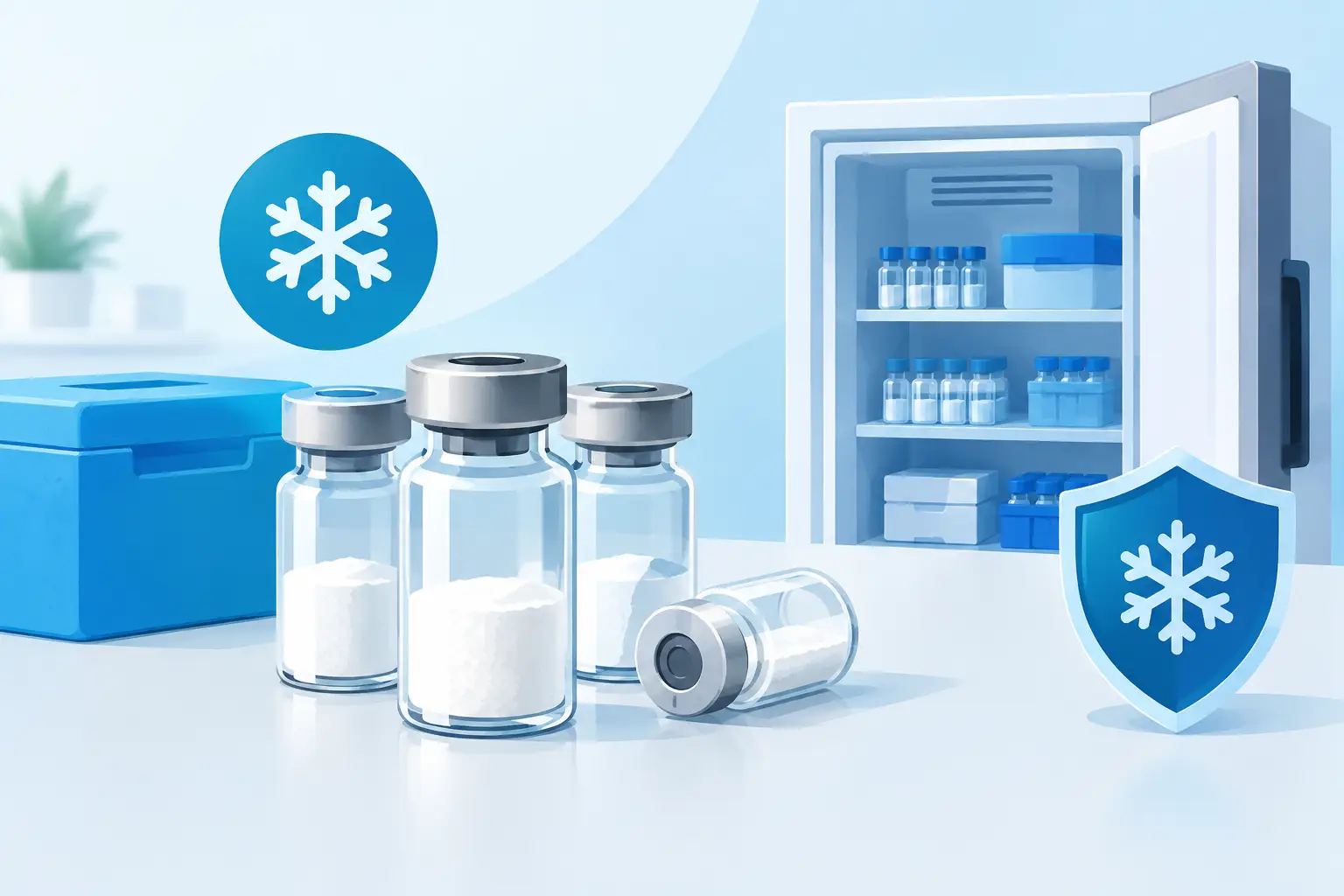
A premium research peptide can leave the lab looking perfectly intact and still produce unreliable results later if storage discipline breaks down. Temperature drift, repeated vial openings, moisture exposure, and weak labeling can all compromise a material long before an experiment begins.
Knowing how to store research peptides is part of protecting the quality you paid for. The goal is not simply to put a vial in a cold place. It is to preserve identity, purity, and stability from delivery through final research use. For qualified researchers, tight storage practices keep the work moving with confidence and help prevent avoidable variables from entering the data.
All materials discussed here are intended for legitimate laboratory research only and are not for human or veterinary consumption.
How to Store Research Peptides Before Reconstitution
For most lyophilized research peptides, the manufacturer’s product documentation is the first authority. Storage requirements can vary with peptide sequence, formulation, packaging, and intended analytical use. Review the label, certificate of analysis, technical documentation, and any handling notes before placing the material into inventory.
As a general laboratory practice, unopened lyophilized peptides are often kept refrigerated or frozen for longer-term stability. A refrigerator range of 36-46°F (2-8°C) may suit short-term storage where product documentation permits it, while freezer storage around -4°F (-20°C) is commonly used for longer periods. Some sensitive materials may require colder storage. Do not assume every vial belongs under the same conditions simply because the compounds are all peptides.
The big priorities are consistency and protection. Keep the vial tightly sealed, inside its original protective packaging when possible, and away from direct light. A frost-free freezer may be convenient, but its defrost cycles can create temperature fluctuations that are less than ideal for sensitive research materials. A dedicated laboratory refrigerator or freezer with monitored temperatures gives researchers more control.
Avoid storing peptides in refrigerator doors, on open benches during workflow, or in areas shared with high-traffic materials. These locations invite temperature swings, accidental disturbance, and mix-ups. A stable shelf or clearly defined freezer box is a better home base.
Keep Moisture and Light Out of the Equation
Lyophilized material is generally more stable than a reconstituted solution, but it is not invincible. Moisture is a particular concern because repeated exposure to humid room air can affect a dry peptide vial over time. Let cold vials come to room temperature before opening them when condensation is a risk. Opening a vial straight from the freezer can pull moisture into the container as it warms.
Once the vial is at room temperature, work efficiently. Minimize the time the cap is off, use clean laboratory technique, and reseal the container promptly. If the original packaging includes a desiccant or light-protective component, keep it with the vial unless the product instructions say otherwise.
Light protection matters, especially for compounds with known photosensitivity. Amber vials, opaque freezer boxes, foil wraps, or light-protective secondary containers can reduce unnecessary exposure. The right level of protection depends on the product, but leaving materials under bright laboratory lighting for hours is rarely a good storage plan.
Reconstitution Changes the Storage Strategy
Once a peptide is reconstituted, storage becomes more time-sensitive. A solution may be easier to pipette and use in a research workflow, but it can also be more vulnerable to degradation, contamination, and repeated temperature changes than the dry material.
Use only the solvent and preparation approach specified by the applicable research protocol or product documentation. If bacteriostatic water or another laboratory-grade diluent is selected, verify compatibility with the specific peptide and study method before proceeding. Solvent choice, concentration, pH, and container type can all influence stability.
After reconstitution, avoid treating the vial as a ready-to-use stock for every future experiment. Each trip from cold storage to the bench adds risk. Repeated warming and cooling can gradually reduce confidence in a solution, particularly when the material is used over an extended timeline.
Aliquoting is often the cleaner approach. Divide a prepared solution into small, appropriately labeled volumes that match expected experiment needs. That way, one aliquot can be thawed or accessed while the remaining material stays undisturbed. It is a simple move that reduces freeze-thaw exposure, supports cleaner records, and keeps your research supply working harder.
Use suitable low-bind tubes or validated storage containers when your protocol calls for them. Some peptides can adsorb to certain surfaces, especially at low concentrations. This is one of those details that depends on the peptide, concentration, assay sensitivity, and validated lab method. If recovery matters to the study, container selection deserves real attention.
Control Freeze-Thaw Cycles
Freeze-thaw cycles are one of the most common avoidable stressors in peptide handling. A cycle occurs when a frozen sample is brought to a higher temperature and then returned to frozen storage. One cycle may be acceptable for certain materials, while repeated cycles can create degradation or variability concerns.
There is no universal number of acceptable cycles. The right limit depends on the peptide and the supporting stability data. Instead of relying on a generic rule, record each event and follow the supplier’s instructions or your laboratory’s validated procedure.
A practical storage setup should make good behavior easy. Prepare aliquots in volumes aligned with routine assay needs, place them in organized boxes, and label positions clearly. If a sample must be thawed, thaw only what is required for that research session. Do not refreeze material automatically just because there is some left. Assess whether the relevant documentation and lab policy support that decision.
Label Like the Data Depends on It
It does. A vial without complete identification can become unusable even if the material itself remains chemically sound. Clear labels prevent mix-ups, make inventory audits faster, and support traceability when an experiment needs to be reviewed.
At a minimum, each primary or secondary container should identify the material, concentration if reconstituted, preparation date, storage condition, and responsible researcher or project code. Include an expiration or review date based on supplier guidance and your internal stability policy. For aliquots, add a unique identifier that connects the tube back to the original vial and lot record.
A simple digital inventory can add major control without slowing down the lab. Track receipt date, lot number, certificate of analysis location, original storage direction, reconstitution details, aliquot count, and every meaningful temperature excursion. A spreadsheet may be sufficient for a small research operation; larger teams may need a dedicated sample management system.
This recordkeeping is not paperwork for paperwork’s sake. If an assay result looks unusual, storage history is one of the first variables worth checking.
Build a Storage Routine That Holds Up Under Pressure
The best peptide storage plan is one the whole team can follow during a busy research week. Create designated locations for unopened vials, working stocks, reconstituted solutions, and materials pending review. Separate them physically and label the zones. This lowers the chance that a freshly prepared solution gets confused with long-term frozen inventory.
Temperature monitoring should be active, not assumed. Use a calibrated thermometer, data logger, or facility monitoring system suited to the equipment and research requirements. Set alert thresholds for freezer or refrigerator excursions and document what happens if temperatures move outside the acceptable range. A brief excursion does not always mean a material is lost, but it should trigger a documented assessment rather than a guess.
Keep storage equipment clean, organized, and protected from overfilling. Air circulation matters in many units, and a packed freezer makes it harder to find samples quickly. The longer a freezer door stays open while someone hunts for a vial, the more every sample inside experiences unnecessary stress.
Pepper Pep brings the heat to research sourcing, but controlled cold-chain handling is what helps preserve that momentum after delivery. High-purity, research-grade material deserves the same level of discipline in storage that it receives in experimental design.
When to Quarantine or Discard a Sample
A visible change in appearance, an unlabeled aliquot, a compromised seal, or an undocumented temperature event should never be brushed aside. Quarantine the material and review the available records before returning it to use. Depending on the peptide, method, and severity of the issue, the right decision may be to test, restrict, or discard the sample.
Do not rely on appearance alone. A solution can look clear and still fall outside the quality expectations required for sensitive research. When confidence in identity or storage history is gone, replacing the material may be less costly than building an experiment on uncertainty.
Strong peptide storage is not glamorous, but it is a performance advantage. Give every vial a stable environment, a clear identity, and a handling plan that matches the research ahead. That discipline keeps preventable variables out of the lab and leaves more room for the results worth chasing.
All products and information provided on this website are intended for laboratory research purposes only. Products are not intended for human consumption and are not intended to diagnose, treat, cure, or prevent any disease.